
Symptoms of Nail Deformity
Nail deformities do not only develop in severe cases—many early signs can be corrected to prevent progression. If you experience any of the following conditions, it is highly recommended that you seek a professional assessment and examination:
◆ Congenital nail deformity or inward curving (curved nails)
Naturally thick and wide nails with a narrow nail bed, which tend to curve inward over time and dig into the surrounding skin, causing discomfort.
◆ Chronic redness, swelling or recurrent pain around the nails
Persistent or intermittent pain and inflammation that fails to improve may indicate mild ingrown or curved nails.
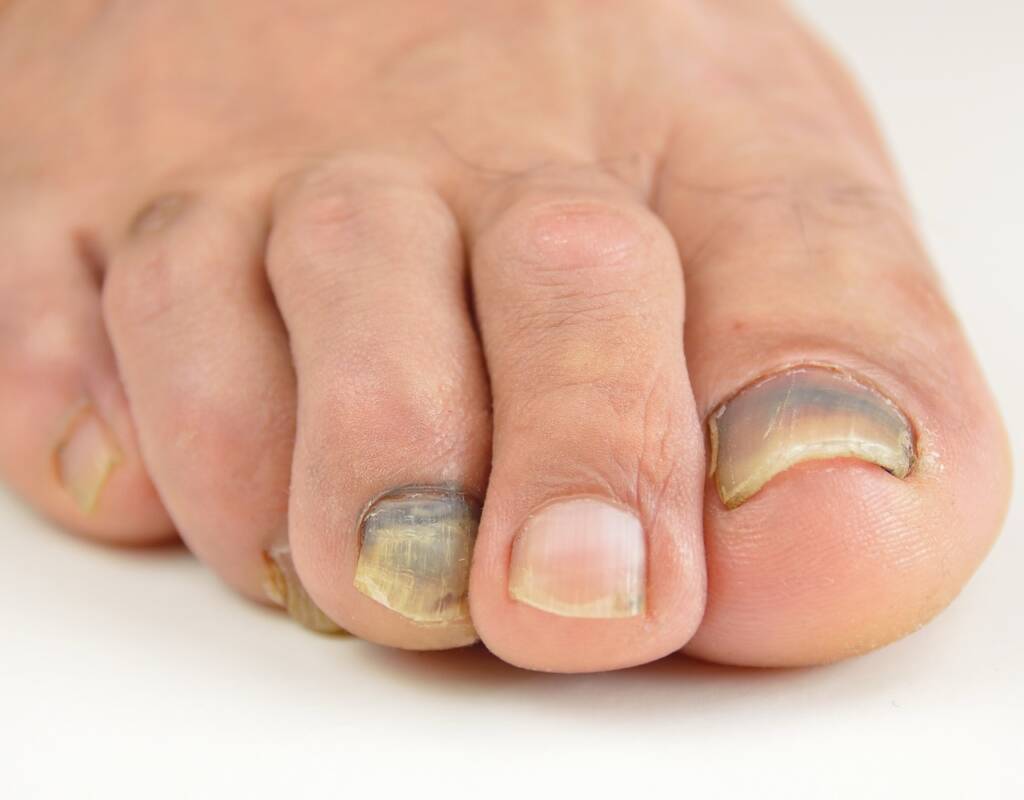
◆ Onychomycosis (fungal nails) or psoriasis
Nail thickening and deformity caused by fungal infection or skin disease.
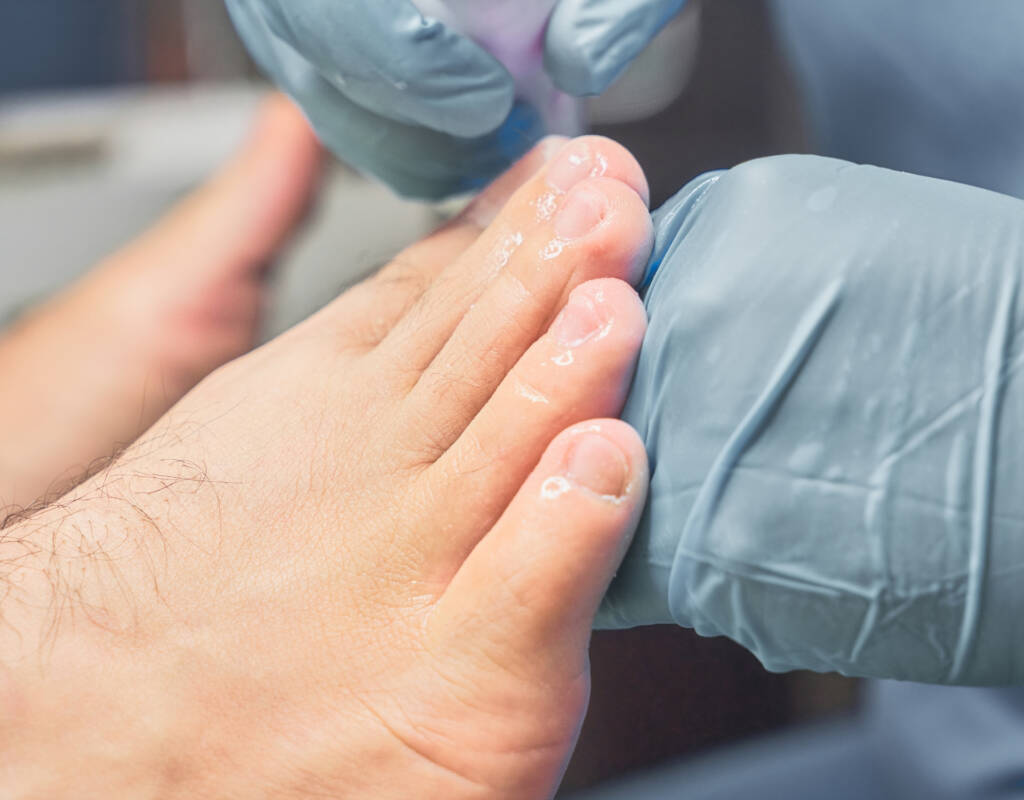
If you experience significant discomfort or abnormal symptoms—including persistent pain, redness and swelling, worsening pus formation, dislodged orthotic devices, or wound exudate—do not attempt self-treatment. Please return to the clinic immediately for examination and professional care.
Common Causes of Ingrown/Curved Nails
1. Improper Nail Trimming
Cutting nails too short or into a curved shape easily causes the nail edges to dig into the skin, leading to ingrown nails over time.
2. Ill-Fitting Shoes
Pointed-toe shoes, high heels, or overly tight sports shoes in particular, exert prolonged pressure on the toes, causing uneven stress on the nail bed and resulting in nail deformity or inward curving.
3. Congenital Nail or Nail Bed Abnormalities
Some people have a hereditary narrow and long nail bed or naturally thick nails, which make them prone to curved nails—this condition is difficult to improve with daily care alone.
4. Trauma or Pressure
Individuals who frequently run, play football, lift heavy objects, or have suffered a toe impact or crush injury may experience altered nail bed growth direction, leading to nail deformity, lifting, or ingrowth.
5. Onychomycosis & Psoriasis
These chronic nail conditions cause thickening, deformity and detachment of the nail plate, disrupting normal growth and eventually leading to curved or ingrown nails.
6. Flat Feet
Fallen foot arches alter pressure distribution on the sole and toes, exerting prolonged pressure on the big toe and causing nail deformity and ingrowth.
Benefits of Professional Podiatrist Care
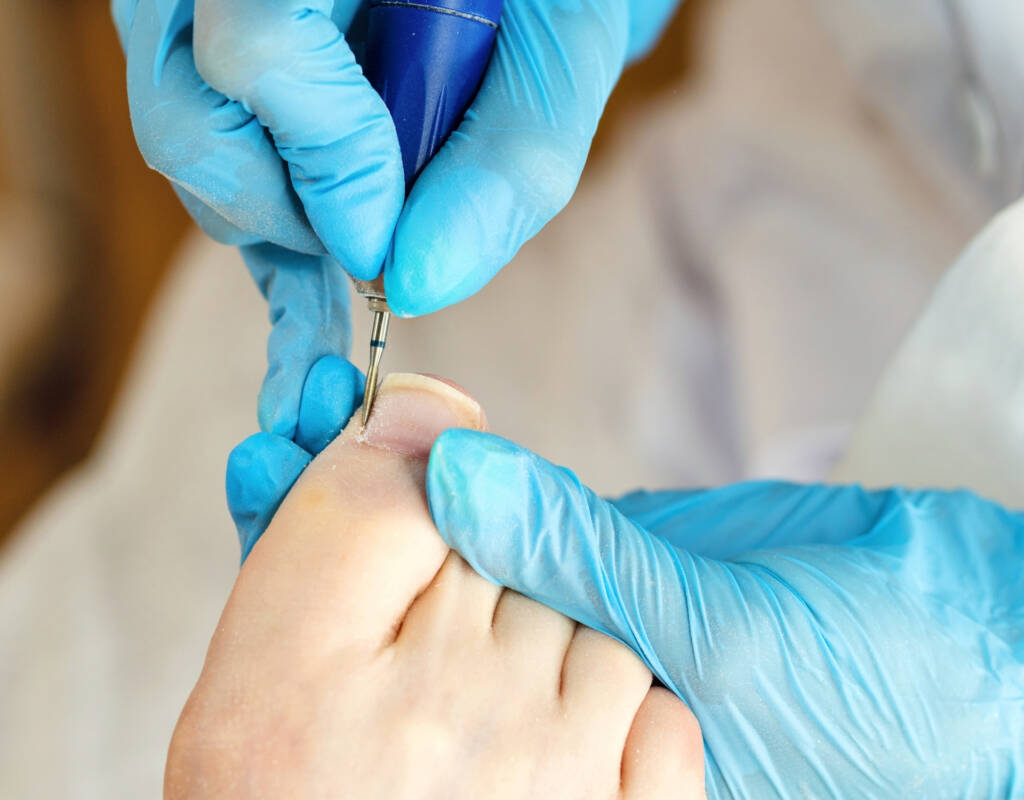
For all the above conditions, our podiatrist provides professional care that starts with a comprehensive assessment and examination, then gradually straightens abnormally curved, ingrown or embedded nails to restore normal growth trajectories, relieve pain and prevent infection.
- Immediate pain and pressure relief:Eliminates sharp pressure from the nail on surrounding skin, ending stabbing pain when walking or wearing shoes.
- Prevention of paronychia or granuloma:Stops persistent nail irritation to the skin, reducing the risk of recurrent inflammation and bacterial infection.
- Reduced recurrence:After a full course of treatment, the nail’s growth direction stabilises, effectively lowering the chance of future curving.
- Improved nail appearance:Treated nails become smooth and elastic, with no visible curving or deformity, boosting confidence and aesthetic appeal.
Curved Nail Treatment Options
Curved nails are sometimes accompanied by paronychia, and treatment methods are tailored to the severity and individual condition. The three most common approaches are as follows:
1. Nail Orthotic Devices (Non-Invasive)
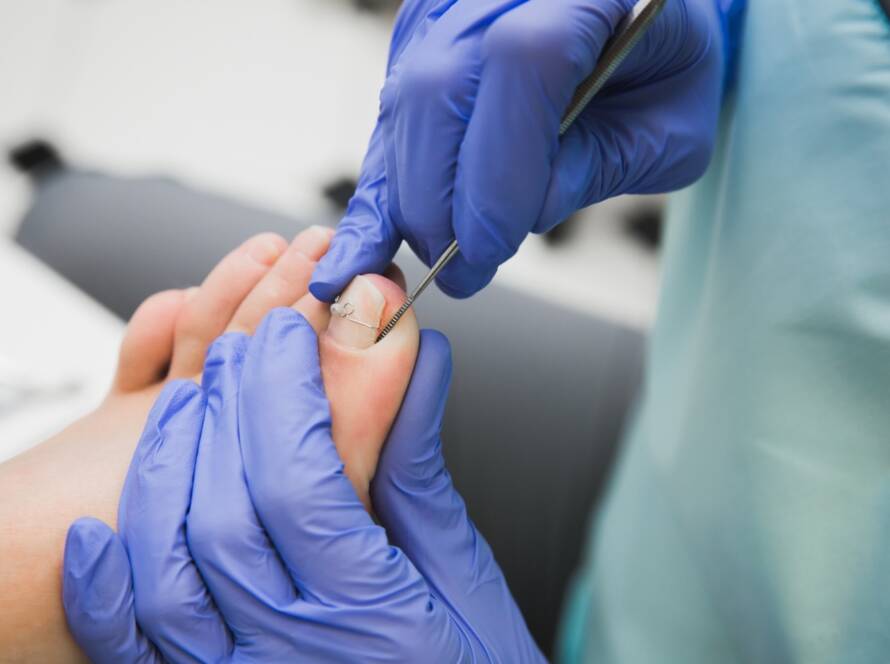
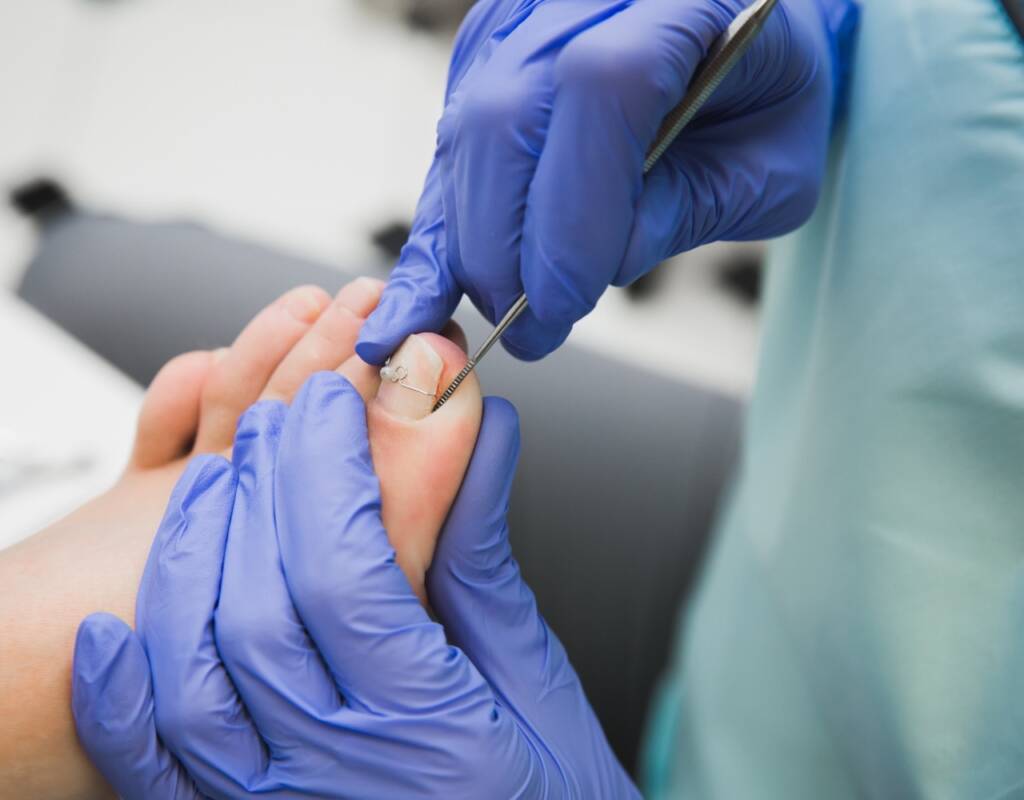
Professional orthotic devices (e.g., patches, memory metal correction wires, coil springs) gently straighten and realign inward-curving nails. This is a non-surgical, virtually painless treatment suitable for curved nails of all stages, and for patients who wish to avoid damaging the nail or nail bed.
2. Surgical Correction (Invasive)
For severe curved nails with granuloma or recurrent paronychia, our podiatrist may recommend surgical intervention—including partial nail avulsion, wedge resection of the nail bed, or laser surgery—to fully correct the nail structure.
3. Regular Trimming & Maintenance
Suitable for mild cases or for maintaining stability after correction. Proper nail trimming techniques, pressure avoidance, and enhanced cuticle care help sustain normal nail growth.
| Treatment | Nail Orthotic Devices | Surgical Debridement | Maintenance |
|---|---|---|---|
| Suitable for | Curved nails of all stages; surgery-averse patients; those wishing to protect the nail bed | Severe deformity and infection; with granuloma | Mild curved nails; post-surgery maintenance |
| Recovery Period | 7–14 days for the first application; 3–7 days for subsequent device changes (minimal recovery) | 7–14 days; strenuous exercise to be avoided | No recovery period |
| Pain Level | Performed under local anaesthesia; minimal post-procedure discomfort | Performed under local anaesthesia; mild post-procedure pain | No pain |
Professional nail treatment is more than just "straightening for appearance"—it involves assessing nail bed structure, inflammation and underlying causes. We always recommend seeking professional medical care as the first step.
Conclusion
Toenail problems not only affect appearance, but can also cause redness, swelling, pain and inflammation, even impairing walking and daily life. At Archangel Podiatry, our Australian Registered Podiatrist provides in-person consultations for common and recurrent toenail disorders such as thickened nails, curved nails, ingrown nails, bruised nails and split nails. We assess nail morphology and the root causes of issues, and leverage 25 years of clinical experience to develop personalised treatment plans following the principles of minimal discomfort and complete root-cause resolution. We offer full professional care from diagnosis to treatment, and while resolving your nail issues, we also teach you daily care techniques to prevent recurrence for good.
I love hiking, and I didn’t pay attention to my ill-fitting shoes. Over time, my nails became deformed without me realising it. When the rainy season came, my shoes stayed wet, and I have sweaty feet—before I knew it, I developed paronychia. Thankfully, I found Archangel Podiatry for treatment. Now I’m walking like a breeze, and even hiking faster than before! Hahaha!"
— Ms. Chow
All treatments are personally performed by our Australian-qualified Podiatrist—no outsourcing, no unprofessional assistants. This guarantees the safety, professionalism and effectiveness of our care, and we have helped thousands of patients overcome toenail disorders and restore healthy nails.